With everyone working together, the fire was put out quickly. Smoke still curled into the sky, the air thick with ash and the sour tang of charred wood. The villagers moved like ghosts through the soot-streaked ruins, coughing and whispering prayers.
The village was in disrepair—hos scattered haphazardly, mud walls crumbling, and thatched roofs caved in. At the center, the communal hall stood partially blackened, scorched beams creaking under their own weight. Khisa squinted through the haze and caught sight of a burnt marking etched into one of the walls.
A cross.
"Is that what I think it is?" he muttered.
[Correct. During this ti in the previous tiline, the Adal Sultanate was at war with the Christian Ethiopian Empire, otherwise known as Abyssinia.]
Ayaan’s voice echoed inside his mind.
"Damn, those missionaries worked fast. How did they even get this far inland?" Khisa’s brow furrowed in concern.
He sighed. "It’s only a matter of ti before they reach Nuri."
[Do you intend to forbid Christianity?]
"No," he replied, quietly. "I was a Christian in my past life. But I want the people of Nuri to be free to choose their own path. In my old world, many churches were filled with hypocrisy. So were good, but far too many exploited the vulnerable. I won’t allow that cycle to repeat here."
They approached a small hut where so villagers had gathered. The Shadow Guard remained outside, drawing curious eyes from the local children. Though the guards didn’t understand the language, they felt the reverence in every wide-eyed stare, every whispered giggle.
Ndengu flexed his muscles and laughed as a group of children ran around him in delight. Naliaka twirled her daggers in a dazzling display, causing a chorus of cheers from both boys and girls. The village won stared in awe—won warriors were unheard of in their culture.
One older woman murmured sothing to her daughter, pointing to Naliaka. Though the words were lost to the guards, the tone was one of wonder, not judgnt.
Khisa stepped into the hut and found an older man seated on a woven mat, flanked by a few younger warriors. The light from a dying fire cast flickering shadows on the walls.
"I heard you are a prince," the old man began slowly, eyeing Khisa with suspicion.
"Yes. I am Khisa Lusweti of the Kingdom of Nuri. We ca in peace. May I ask where exactly we are?"
The old man narrowed his eyes. "You speak our language too well. Too perfectly. It is not natural. Are you an Adal spy, perhaps? Sent here to trick us with honeyed words?"
Khisa t his gaze. "I understand your caution. But it is the truth. My guards and I are traveling north, seeking allies to resist the growing threat of foreign slavers and warmongers. We an no harm."
The chief crossed his arms. "I have never heard of this... Nuri. What proof do you offer that you are not just another smooth-tongued invader?"
Khisa took a breath. "We are a new kingdom, built on unity, freedom, and the hope of sothing greater. I don’t expect you to trust imdiately—but we want to help. That should count for sothing."
The chief’s eyes flicked toward the doorway, where Naliaka and Ndengu laughed with the children. He tilted his head. "Your warriors... they do not speak our tongue. And yet they smile like kin. Strange."
"They don’t need words to connect with people. They understand loyalty and compassion."
The old man’s suspicion slowly gave way to curiosity. He shifted on the mat. "You are within the Abyssinian Empire. We are at war with the Adal Sultanate to the north. For months, their n have co in the dead of night. Burning churches. Killing our n. Taking our won and daughters."
His voice cracked. One of the younger warriors clenched his jaw, a silent fury behind his eyes.
"They do not simply fight. They desecrate. They humiliate. One of their raids left a child crucified on a tree, a ssage scrawled in blood above him. They want to break our will."
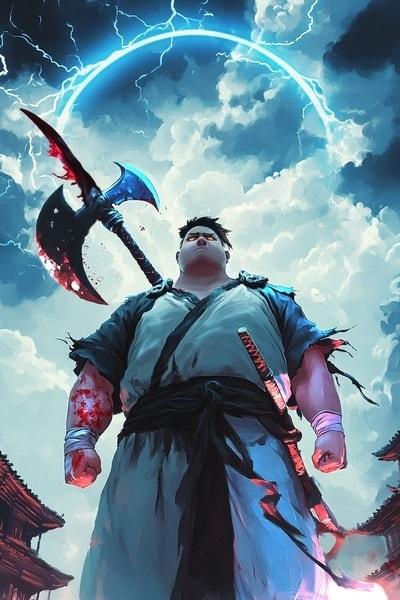
Khisa clenched his fists. He could almost feel the axe at his back humming with anticipation.
"Our army is stretched thin," the chief continued. "We beg for help, but only silence cos from the capital. Our village was once vibrant—filled with laughter and trade. Now it is dying."
He looked Khisa in the eye. "Even if I believed you, what could you possibly do with only twenty warriors? Will you call your army?"
Khisa stood slowly. The firelight shimred on his dark skin, making his eyes seem to glow. "Our kingdom is far, and we don’t have ti to summon our forces. But we have sothing just as powerful—resolve. You see twenty warriors. I see twenty Shadows, forged by fire and purpose."
He reached for his axe and rested it over his shoulder. "We will not let this village fall. We stand with you. Not for glory. For justice."
The chief stared at him, slack-jawed. For a mont, Khisa’s presence filled the room with sothing warm and golden—like sunlight breaking through storm clouds.
"Take this as a gesture of goodwill. In the future, when we call for aid, I hope you rember this day."
The old man chuckled, though it was hoarse with disbelief. "I don’t think my old bones could swing a sword even if I tried."
Khisa smiled. "You won’t need to. Old or young, everyone has a part to play. Even a warning, a ssage, or a al can save a life."
He stepped out of the hut. The Shadow Guard imdiately stood at attention.
"Shadows!"
"Sir!" their voices bood in unison.
"You’ve trained for years. Now it’s ti to act. These people are being terrorized by nearby rebels. Slavers and murderers. We end that today. Show them no rcy."
"Yes, Sir!"
The villagers watched with open mouths as the Shadow Guard mounted their horses with practiced ease. Even without words, they felt the shift in energy—these warriors were different. Their presence alone brought hope.
"Point us in the direction of their last known raid," Khisa said.
The old man hesitated, then stepped forward and pointed east. "That way. Toward the hills. They have set up a military base there. But beware—the Adal soldiers are not re raiders. They co in waves."
Khisa’s eyes were hard as iron. "Then let them co."
He mounted his horse and turned to his warriors. "Move out!"
Hooves thundered against the earth as the Shadow Guard rode east, leaving a trail of rising dust behind them.
The villagers stood in silence, watching them disappear.
"Perhaps," the old chief murmured, "we have not been abandoned after all."







Reviews
All reviews (0)