Vaiśampāyana continued:
About this ti, Pratīpa, the light of the Kuru race and foremost among Kṣatriyas, took to the path of austerity along with his queen, driven by a deep longing for offspring. Year after year, they observed sacred vows, dwelling at the holy bank of Gaṅgā, their hearts fixed in penance.
And when their bodies had grown frail with age, the gods answered their longing—a son was born unto them.
This child was none other than Mahābhīṣa, reborn on Earth in fulfillnt of Brahmā’s decree. Because he was born after long penance and restraint, his na was Śāntanu—"he who was born of peace and self-control."
Born of penance, calm and pure,
His soul like fla serene and sure.
He ca with fate’s unspoken call—
To raise a house, to bear its fall.
Śāntanu, even in youth, was wise beyond his years. Knowing that bliss eternal is won through one’s own deeds, he turned his heart toward righteousness. He was steadfast in virtue, gentle in rule, and firm in dharma.
And when he ca of age, Pratīpa, his father, spoke to him in secret:
“O Śāntanu, my son of peaceful birth,
A ti ago, when I dwelt in penance,
A celestial maiden of fair form ca to .
She ca not for my sake—but for thine.
If ever thou shouldst et a woman radiant as the moon,
One who seeks thee without na or lineage,
And if she asks thee for children—do not turn her away.
Ask her not who she is, nor whence she ca.
Judge not her actions by the asure of the world.
Accept her as thy wife, O sinless one, for in that union
Lies the turning of fate and the rise of your na.”
So spoke the king who saw ahead,
While dharma’s stars their courses spread.
A river waits, a vow once sworn—
The son shall et what sire had borne.
Vaiśampāyana continued:
Thus did Pratīpa, having instructed his son Śāntanu with the words of foresight and dharma, renounce the throne and retire to the forest. There he lived in solitude, offering his last years to ascetic peace.
And Śāntanu, blessed with brilliance and deep wisdom, ascended the Kuru throne and ruled with justice and compassion. Like Indra in glory and restraint, he brought prosperity to his people.
Yet in his heart lingered a restlessness.
He grew fond of the forest, of the thrill of the hunt. Often he road the woods, his bow in hand, his spirit stirred by the wild.
The king who ruled a realm so vast
Found stillness in the arrow's cast.
But deeper still a fate unseen
Was guiding him by forest green.
One day, as he wandered along the sacred banks of the Gaṅgā, he ca upon a secluded region—one hallowed by the presence of Siddhas and Cāraṇas, divine sages and celestial bards. There, like a vision rising from the waters, he beheld a maiden.
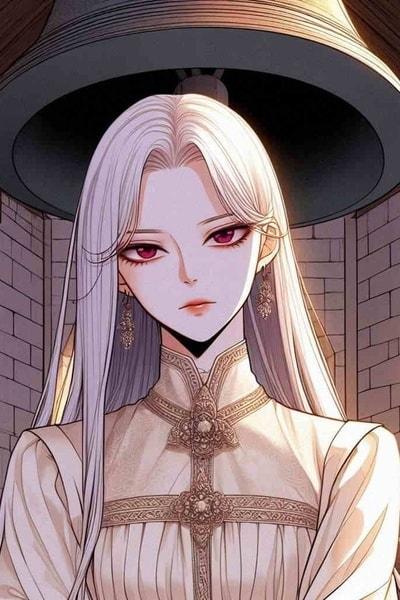
She stood with the radiance of Śrī herself, goddess of fortune—her form flawless, her ornants celestial, her robes as delicate as lotus filants. Her teeth shone like pearls, her beauty blazed like dawn on silver snow.
The mont Śāntanu’s eyes fell upon her, he was seized with wonder. His breath caught. His limbs trembled. A strange ecstasy swept over him, and his hairs stood on end.
He drank her form with longing eyes,
A hundred glances not suffice.
His gaze returned as if by spell—
For in that face, all beauty fell.
And she, too, beheld him with wonder. The king of blazing splendor stirred sothing within her—so ancient thread, so sacred vow. She gazed again, and again. Her heart, once bound to heaven, now trembled on earth.
Moved by desire wrapped in dharma, the monarch spoke gently:
“O slender-waisted one,
Whether thou art goddess, or daughter of Dānavas,
A Gandharvī, an Apsarā,
A Yakṣī, Nāgī, or woman of this world—
I know not what form thou takest.
But thy beauty burns through every veil.
If thou art free to choose, then I beg of thee:
Co, be my wife.”
Vaiśampāyana continued:
Hearing those soft and noble words of desire from the smiling monarch, the maiden—she who was in truth the goddess Gaṅgā, bearer of the three worlds—rembered her vow to the Vasus, and spoke with sweet serenity.
Of flawless form and radiant voice, her every word stirred joy in the king’s heart.
“O king,” she said, her voice like a river’s song,
“I shall beco thy wife and obey thy will.
But hear this solemn condition, and hold it as law:
Thou shalt never interfere with in anything I do—
Be it pleasing or grievous, gentle or strange.
Nor shall you ever address with unkindness.
As long as you honor this vow, I shall remain by your side.
But the day you question or reproach ,
That day I shall leave you.”
The king, moved by love and caught in her divine charm, replied:
“Be it so.”
And thus, with the covenant sealed by silence and longing, Śāntanu, lord of Earth, took her hand. The celestial river, now in mortal form, beca his queen.
Heaven's stream in mortal guise,
Her gaze deep as twilight skies—
She walked beside the Kuru king,
A secret tide beneath her wing.
He asked her nothing, as promised. And she, in turn, gave him joy without asure.
Śāntanu, tiger among kings, was captivated by her beauty, grace, and the tenderness with which she served him. Her voice was music, her glance a benediction. With dance and laughter, with affection and silence, she pleased her lord and herself was pleased.
Thus lived Gaṅgā, daughter of the infinite waters, radiant as the moon, moving through celestial, terrestrial, and subterranean realms, now a woman in love and in vow.
If you encounter this tale on Amazon, note that it's taken without the author's consent. Report it.
A goddess bound by fate and fire,
A king subdued by pure desire—
Together they wove a silent thread,
Of love, of loss, of tears unsaid.
Vaiśampāyana continued:
And so enraptured was Śāntanu, O king, by the beauty and grace of his queen, that months, seasons, and years passed like fleeting dreams. The flow of ti, like her own river, moved unnoticed in the joy of her presence.
In that divine union, eight children were born to him—each radiant like a god, their forms shining with celestial light. But with every birth, the queen did the unthinkable.
As each infant ca forth, Gaṅgā would rise in calmness, cradle the newborn to her breast, and walk silently to the river. Smiling, she would cast the child into the waters, saying only:
“This is for thy good.”
And each child sank beneath her sacred waves, never to rise again.
The river bore their silent cries,
As stars returned to distant skies.
The father watched, his voice restrained—
In love and fear, his soul remained.
Though Śāntanu was torn with anguish, he kept his vow. He asked her nothing, said nothing. For the fear of losing her bound his tongue more tightly than sorrow. Yet his heart grew heavier with every child lost to the river’s depths.
But when the eighth child was born, and Gaṅgā, as before, rose to offer it to the waters, Śāntanu could bear it no more. His sorrow overflowed like the flood itself, and he cried out:
“Kill it not! No longer can I endure this cruelty.
Who art thou, O woman of mystery?
Whose daughter, and what deed is this?
Why slayest thou thine own innocent sons?
O destroyer of thy children, thy burden of sin is imnse!”
At this, Gaṅgā, smiling still yet filled with celestial calm, turned to him and spoke:
“O king who longed for sons, know this:
Thou hast indeed beco the first of fathers.
I shall not take this child—thy eighth—from thee.
But hear now, for the hour of parting has co.
I am Gaṅgā, daughter of Jahnu, goddess of three worlds—
Celestial, terrestrial, and subterranean.
I am worshipped by sages and sanctified by gods.
Know, O Śāntanu, that I ca to Earth for the sake of the celestials.
The eight Vasus, radiant beings of heaven,
Were cursed by the sage Vasiṣṭha to be born as mortals.
Bound by their fate, they begged to be their mother,
And I agreed—for among n, you alone
Were worthy to be their sire.
And among won, there was none but I
Who could bear and release them.
Seven I have returned to heaven,
Delivered from the weight of flesh.
This one I now leave to you—
For his role is not yet done.”
Vaiśampāyana continued:
With calm radiance in her eyes, Gaṅgā, the celestial mother, spoke her final truth to the sorrow-stricken king:
“O Śāntanu, know this—by fathering the eight Vasus,
You have earned the rit of a hundred sacrifices.
You shall dwell in heavenly realms of eternal peace,
For your part in their deliverance is blessed beyond asure.
It was agreed—between and the Vasus—
That the mont each was born, I would release them
From their mortal coil and the curse of Ṛṣi Vasiṣṭha,
Also known as Apāva, whose wrath they once incurred.
Seven I have returned to the heavens.
They shine once more among the stars.
But this one—the eighth, born of their combined energies—
Has a fate that must unfold upon Earth.
He shall remain.
Rear him, O king of Kurus, with care.
He shall walk the path of unshaken vows.
A lion in battle, a sage in thought,
His will shall never waver, nor his word be broken.
Let this child be known as Gaṅgādatta,
Gift of the river, son of the stream divine.”
Having spoken thus, Gaṅgā, ever serene, cast one last glance upon Śāntanu—tender, distant, and divine—and vanished once more into her sacred waters, her task fulfilled, her bond complete.
A wave returned, a vow unrolled,
A tale of gods in silence told.
She bore the stars, then gave one light—
To shape the world through dharma’s fight.
And the king stood on the riverbank, holding his son—
Not just a child, but destiny incarnate.
Vaiśampāyana continued:
Hearing Gaṅgā’s final words, the noble king Śāntanu, though grieving, sought to understand the deeper web of fate. With folded hands and voice steady with reverence, he asked her:
“O daughter of Jahnu,
Tell , what fault did the Vasus commit,
That they, lords of the three worlds,
Were condemned to take birth among n?
And who is this Apāva, by whose curse they fell?
What sin had this child, Gaṅgādatta, committed
That he alone must live among mortals?
O divine one, make this clear to .”
Thus questioned, the celestial Gaṅgā, glowing with serene light, replied to her husband, that bull among kings, with words as clear as the river’s current:
“Hear, O Śāntanu, of a tale ancient and sacred.
Among the gods, Varuṇa—lord of waters—
Once obtained a son through divine austerity.
That son beca known as Vasiṣṭha,
Though in later tis he was also called Apāva,
For reasons hidden in ti’s folds.
He was a great Ṛṣi, supre in truth and tapas,
And his āśrama lay upon the holy slopes of Mount ru—
The golden mountain, king of peaks.
There blood, in all seasons, flowers of every hue.
Birds sang in divine tongues, deer moved unafraid,
And sweet roots and flowing waters nourished the sage,
As he dwelt in unbroken penance,
His soul fixed on Brahman.”
Vaiśampāyana continued:
O king, listen now to the ancient tale of fate and folly that led the radiant Vasus, lords of the heavens, to their mortal descent.
In ages past, Dakṣa, the Prajāpati, had a daughter nad Surabhi, mother of kine. For the good of the world, she united with the sage Kaśyapa, and from their union was born a daughter—Nandinī, the divine cow.
Born as a kāmadhenu, a cow of endless bounty,
She was sacred, celestial, and wondrous to behold.
Her gaze was tranquil, her form auspicious,
Her udders flowed with milk that bestowed youth,
Health, and fulfillnt of every desire.
This sacred cow was given to the son of Varuṇa, the great Ṛṣi Vasiṣṭha, for use in his homa rites. In his forest āśrama nestled on the holy slopes of ru, Nandinī road free—revered by all, touched by none, a living goddess amidst trees and sages.
Then ca the day ordained by karma.
The Vasus, radiant gods and guardians of the elents, entered that sacred grove with their wives, led by Prithu and the bright-limbed Dyu. Delighting in the forests and celestial peaks, they wandered through that land of divine peace.
As they wandered, Dyu’s wife, a slender-waisted beauty with eyes like lotus-petals, beheld Nandinī.
Her form shone with golden light,
Her milk pure nectar, her gaze bright.
Every limb a blessing made,
In her, the wish of worlds was laid.
Seeing the divine cow, the goddess turned to her husband and said:
“O lord of blazing splendour,
This cow belongs to the Ṛṣi who dwells in this holy forest.
Yet I have a dear friend upon the earth—
A princess nad Jitavatī, daughter of the royal Ṛṣi Uśīnara.
She is youthful, fair, and noble in mind.
Grant this boon:
Bring her this cow and her calf,
So that she may drink of its milk
And be free from disease and age,
Alone among mortals.
This, O faultless one,
Is the desire that would please most.”
Hearing her plea, the Vasu Dyu, swayed by affection and montary blindness to dharma, agreed. With the aid of his brothers—Prithu and the others—they stole the cow, heedless of its sanctity, heedless of Vasiṣṭha's towering ascetic rit.
Desire clouded the wisdom of gods,
And heaven's law was quietly undone.
For a fleeting wish, the world would bend—
And thus began the Vasus’ end.
They forgot, in that mont of indulgence, that the cow of a Brahmaṛṣi is no common possession. To violate her sanctity is to violate dharma itself.
Vaiśampāyana continued:
At twilight, the great Ṛṣi Vasiṣṭha, son of Varuṇa, returned to his hermitage, carrying the fruits he had gathered with care. But as he stepped into his grove, his heart stirred with unease—he heard no lowing, saw no trace of his beloved Nandinī, nor her calf.
He searched the woods with keen senses, calling to the silent trees, listening for the rustle of hooves or the whisper of divine breath. But neither leaf nor wind answered him.
No hoof struck soil, no bell did ring,
No sacred low the dusk did bring.
The grove stood still in breathless hush—
The cow of gods was gone in rush.
Then, closing his eyes, the Muni, of supre tapas and inward fire, turned his gaze within. His ascetic power pierced the veils of ti and space, and in an instant, the truth was laid bare before his spirit:
The Vasus, gods of the elents,
Had stolen the cow.
His wrath blazed like a sun of curse, yet it was calm—asured, exact, unerring. He did not cry aloud nor summon thunder. He spoke, and the cosmos shifted.
“Because the Vasus, proud dwellers of heaven,
Have stolen my sacred cow—the giver of homa,
She of sweet milk and beautiful tail—
Therefore shall they be born on Earth.
Let them fall from their glory.
Let them wear the bonds of flesh.
Let them taste mortality for their theft.”
His words struck like thunder veiled in silence,
Etched not in wind but in dharma’s stone.
And thus the Vasus, shining ones of old,
Were bound to earth by a sage’s tone.
Vaiśampāyana continued:
O bull among the Bhāratas, when the illustrious Ṛṣi Apāva, blazing in ascetic might, had pronounced the curse, he returned to his ditations, his mind once more turned inward—still as the deep sky.
But soon the Vasus, radiant though now troubled, learned of their downfall. Distressed, they hastened to the hermitage of the sage. With joined palms and bent heads, they stood before him, gods now brought low by guilt.
“O lord of penance,” they pleaded,
“Forgive us, who forgot thy rit for a mont’s desire.
Release us from this fall,
For we are but bound by our own blindness.”
Yet the great Brahmarṣi, conversant with all the laws of dharma, was unmoved. His wrath was just, and the fire of his words could not be withdrawn.
He said:
“Ye Vasus, know that I do not speak in vain.
My words, once loosed, are like destiny.
Yet because your fault was minor, and you ca with remorse,
I shall grant a asure of grace.
All of you—save one—shall be freed from this curse
Within one year of your birth among n.
But he who committed the act—Dyu,
Who stole the cow at his wife’s insistence—
Shall endure a longer fate.”
“Let him be born among n,” said the sage,
“Yet let him retain wisdom, truth, and restraint.
He shall never know the joy of children,
Nor the embrace of woman.
Yet he shall be righteous, steadfast, and wise—
A pillar of dharma, unmatched on Earth.”
So spoke Apāva, voice of fla,
And fixed in stone Dyu's na.
A god to fall, a vow to keep,
A fate to burn while others sleep.
Vaiśampāyana continued:
Having uttered the destiny of the Vasus, the great Ṛṣi Apāva departed to resu his ditations, leaving behind the echo of his decree—firm, final, and infused with dharma.
Then the Vasus, their pride dissolved and their karma accepted, ca to , O king, said Gaṅgā, goddess of the celestial streams.
“O mother of waters,” they said,
“Grant us release the mont we are born.
Let us not linger in the bonds of flesh.
Throw us into your own sacred waters,
That we may swiftly rise back to the heavens.”
And I, moved by their repentance and bound by my promise, fulfilled their request.
Seven I returned to the sky,
Their touch with Earth a mont’s sigh.
But Dyu, the eighth, the cause of fall,
Must walk the path of n through all.
He alone remained, the bearer of long fate—
Wise, chaste, resolute, and silent in suffering.
Having thus spoken, the goddess Gaṅgā vanished before Śāntanu’s eyes, leaving behind only mory and mist. Taking the child, she ascended to the region she chose—hidden from mortal sight—to raise the boy in secret under divine tutelage.
And that child of destiny, born of river and king,
Was known in the world as Gaṅgeya, son of Gaṅgā,
And also as Devavrata, divine in vow and virtue.
In knowledge, arms, and discipline,
He excelled even his father—
A youth of radiant promise and thunderous fate.
By gods and sages he was taught,
With Veda's fire and warrior's thought.
A soul prepared for dharma’s weight,
He bore within the storm of fate.
But Śāntanu, bereft of his queen, returned to Hastināpura heavy with sorrow. His heart was pierced not by war, but by the silent absence of one who had beco his world.
The river flowed, the palace sighed,
And love was lost in fate’s wide tide.
Now, O king, said Vaiśampāyana to Janajaya,
Hear of the many virtues, the glory, and the fortune of that illustrious monarch, Śāntanu of the Bhārata race—whose legacy would one day be the foundation of this mighty tale, the Mahābhārata itself.







Reviews
All reviews (0)