The small town did not burn that day.
It emptied - slowly, deliberately, as if the land itself had learned to make room.
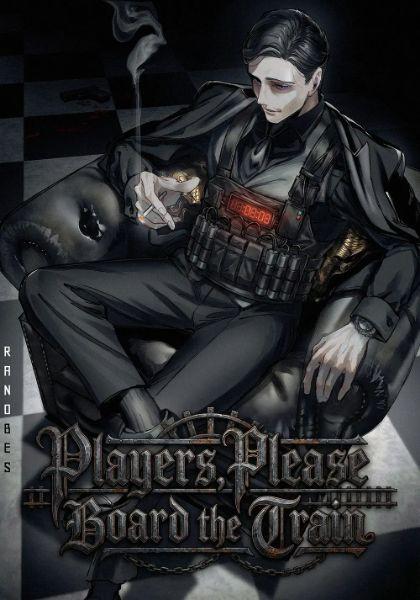
Fields lay trampled but intact, storehouses unlocked rather than destroyed, roads cleared instead of cratered. Nothing was ruined beyond use. Dane took what he required to remain functional.
Destruction was loud. Fear, when asured, was intimate.
He stood in the upper gallery of a commandeered manor overlooking the lowlands. The forr lord had fled in haste, leaving behind ledgers, half-drunk wine, and a house that still rembered being safe. The room slled of ink, cold stone, and old perfu - faint traces of lives interrupted.
Below, in the courtyard, torches burned.
Maps covered the long table behind him - not battle lines, but trade routes, family holdings, marriage ties. Neutral houses, stripped down to what made them vulnerable.
"We have opened our granaries," a captive rchant said, fingers stained with wax and worry. "Willingly and without protest."
Dane watched the street through the narrow window slit.
"Good," he said. "It seems like you learn quick. A few drops of blood taught faster than words, don’t they?"
No Lords shared the room with him. No n eager for glory or blood. Only those who understood that influence was more effective when it lingered.
"They’re going to ask for protection, my Prince," a captain said. "From Northern reprisal, should they find out that these people gave up without so much as a fight."
"They will receive it," Dane replied. "At a price they will rember."
A sound rose from below - sharp, sudden. A woman’s voice, lifted too high, too fast. It cut off just as abruptly, swallowed by murmurs and laughter that did not belong to her.
One of the rchants shifted uncomfortably as his eyes drew towards the open window.
Dane did not move. He remained where he was, eyes forward, listening - not with interest, but with assessnt. This was how terror learned to settle into bone: not in chaos, but in routine.
"It seems like the n took to heart what they’ve been told," he said calmly, "to take what they have earned. Fear must feel earned. It is sothing personal. Sothing these people would replay when they close their eyes."
Surprisingly, another captain hesitated. "So of the n might have been... excessive."
Dane turned then, his gaze cool, sharpening the air between them.
"Then ensure it is seen," he said. "Ensure these people understand what resistance buys them - and what it costs to refuse us."
The captain swallowed and bowed his head.
This was not indulgence. Dane never touched the spoils of war. Never joined. Distance preserved clarity. Desire, when scattered, beca weakness.
He only ever wanted one woman. The one promised to him, Aya of House Svedana.
He thought of her often - more than strategy demanded, though he frad it as inevitability rather than hunger. She was not rely his obsession. To him, she was a fixed point around which resistance organized itself.
So people were obstacles. Others were destinies.
He completely believed that Aya belonged to the latter.
It was a pity I did not get to see her in Ceadel when she... visited.
In his mind, this was not an obsession. It was recognition, fate revealing itself through ti.
The North would break, as all things do, and she will eventually be his to claim. Maybe not by force, but from stress applied patiently. And when it does happen, she would stand before him - not ruined, not debased - but forced to choose survival over pride.
He had imagined, many tis, her anger first. Her refusal. He would all but welco it. He would not be expecting anything less from the girl he once saw fight for her older sister inside House Islan’s court.
Below, boots crossed the courtyard. Another scream tore free - brief, uncontained - then dissolved into the night. The torches burned steadily on.
Dane closed his eyes for a mont. Necessary, he told himself. As a war without banners required lessons written into mory, not ash.
"Let the n have their fill of the spoils and get so respite," Dane said, having just decided on a course. "We move out and forward at first light." He added as he turned away from the windows.
***
Two days later.
House Brevan, a minor house in the North, had survived the war years ago by never choosing a side and remaining truly neutral.
Their lands sat astride a narrow river pass - too valuable to ignore, too exposed to defend outright. For generations, they had paid tolls, hosted envoys, married carefully, and kept their banners folded.
Neutrality, to them, was not cowardice. It was survival.
The first Western soldiers arrived without armor. They paid for bread. Paid for ale. Spoke to the guards at the gate and asked only for shelter from the cold. The Brevan Lord, old, cautious, and practiced in court, allowed it.
That was his first mistake.
The second was when another group of Western soldiers arrived and, by his grace, they were once again allowed inside. They ca at dusk, boots muddy, voices loud enough to be heard in the town.
By nightfall, their treacherous plans began.
No bodies were left in the streets. No buildings burned. Instead, their won did not co out the next day. Mothers kept their children inside. Husbands were told - quietly, but clearly - that resistance would make things worse.
House Brevan’s banner still flew, but their people no longer believed in what it symbolized.
When Lord Brevan was finally able to send word to the northern capital, his letter had all been written with a trembling hand and a single line.
We have been invaded and no longer whole.
At that, Lord Brevan signed away his authority that very night.
Not in the hall where his forebears had sworn oaths with wine and witnesses, but in a side chamber that slled of damp stone and old incense. One candle burned and no banners were present.
He read the docunt twice, though the words served no purpose to him. Fear had already settled into him days ago, heavy and permanent.
Trade access and any information he can provide about Vetasta, Commander Elex of House Svedana, and his troops, while Western patrols are stationed within his lands for security.
And a final clause, written smaller than the rest.
Compliance would be ensured.
Brevan’s hand shook as he pressed the seal into wax.
Outside, the lower quarter remained dark. Too quiet and still. He had not walked among his people since the first night of the invasion. He had told himself it was rcy not to look.
A knock ca at the door and one of the Western envoys entered without waiting for permission.
He did not bow.
"It’s done," Lord Brevan said quickly, holding up the sealed parchnt as if it might shield him. "House Brevan submits. Please, the people-"
The envoy examined the seal, nodded once. "Wise."
Brevan swallowed. "You said the... pressure would ease on us. Please allow to send-"
"It will," the man replied. "Once your people understand the new order."
A prolonged scream rose from the square below them.
Lord Brevan flinched despite himself.
"That wasn’t necessary," he whispered.
The envoy looked at him with mild curiosity. "Necessary is not the sa as useful, my Lord. This is useful."
The man turned to leave.
Lord Brevan spoke before he could stop himself. "The North will co for you."
The envoy paused at the threshold. "Then you will tell them you chose us. And they will understand what neutrality truly costs."
When dawn ca, House Brevan’s banners were lowered and Western colors rose in their place. Not many. Just enough to be seen.
Lord Brevan stood on the balcony and read his declaration with a steady voice that did not belong to him anymore. Below, his people listened in silence. No cheers. No cries. Just eyes that had already learned what his words ant.
By midday, the Northern capital had heard that House Brevan had sworn fealty to the West.
Not in open battle, but by choice.
The crack that had begun in silence split wide enough for the war to finally show its teeth.
And ways away, Dane marked Brevan from his ledgers.
A House broken cleanly always served as the best example.
He had not needed to force the choice.
He had only needed to make survival feel smaller than surrender.
***
By the ti night quieted, the consequences of a single choice rippled like cracks across ice. House Brevan had bent, broken under the weight of fear and cunning, and in its quiet submission, it had written a new lesson for every neutral family that still resides in the northern territories. The North had not yet marched, its banners had not yet moved. And still, Dane’s reach had affected them all with this single move.
Elex had read the missive in silence. His jaw was tight, fingers pressed against his temple. He wasn’t surprised, but he thought House Brevan would at least hold on for so days before they march. Every Lord and soldier in Vetasta understood what was at stake. Their loyalty tested not by combat but by affiliation. And as they debated quietly, weighing which allies might falter next, the ssage was clear: hesitation was a luxury they could no longer afford.
Aya would see this soon too. The letter would arrive in her hand with no preamble, no comfort. When she read it, she would feel the pressure not as an abstract strategy, but as a living, pressing weight - one she could neither ignore nor delegate.
And sowhere far west, Dane watched, calm and collected, convinced that each move, each fracture, was exactly as it should be.







Reviews
All reviews (0)