The Arrival of Sauti
In the forest of Naimishya, sacred and serene, where the trees whispered mantras and the wind carried the scent of clarified butter, the yajña fire had just dimd, its smoke curling upward like an offering of mory. Here, under the canopy of dharma, the rishis rested after twelve solemn years of sacrifice. They had gathered to serve Saunaka Kulapati, their revered preceptor, a sage of austere vows and unshakable wisdom, whose presence brought order to their rites and clarity to their pursuit of truth.
Then ca a traveler, dust-covered, calm,
Bearing the weight of stories long,
Son of Lomaharṣaṇa, fad for psalm,
Sauti the wise, with mory strong.
They welcod him with warmth. Saunaka, their chief, spoke:
“Be seated, O Sauti. Let the dust of your journey settle. Tell us: where have you been, and what sacred tales do you bring?”
With folded palms, Sauti bowed:
“O noble ones, I co from the yajña of Janajaya, son of Parīkṣit, where sage Vaiśampāyana recited the Mahābhārata, composed by Kṛṣṇa Dvaipāyana Vyāsa. From there I traveled to Samantapañcaka—land of five sacred lakes—where the Kuru and Pāṇḍava lines fought their montous war.”
There blood and dharma mixed like fire,
Where heroes fell, yet did not die.
Their deeds still echo, climbing higher,
To et the stars that haunt the sky.
“Desiring sacred company,” he said, “I ca to the grove of you, the wise, whose presence shines like Brahmā’s own.”
The sages said:
“O Sauti, recount the sacred Purāṇa, first uttered by Vyāsa the island-born—heard by Devas and Brahmarṣis, profound in language and structure, born of Vedic truth.”
Folded hands rose in reverence.
Words turned solemn, soft, and few.
“Let us hear that tale imnse,
That brings the ancient truths anew.”
Sauti bowed low, the firelight flickering in his eyes. For a mont, all was silent—the forest, the wind, even the breath of those assembled. Then, with the solemnity of a bell tolling across ages, he began:
“O sages, hear now what I declare, having bowed down first to Īśāna, the primal being—
He who is offered worship by multitudes, and who himself is the eternal object of worship;
He who is Brahma—imperishable and unborn—perceptible, imperceptible, beyond all decay;
He who is Being and Non-Being, the essence of what is and is-not;
The all-containing Universe, and yet that which transcends both the existing and the non-existing world.
He is the source of high and low, the exalted One, the inexhaustible cause,
Who appears as Viṣṇu, the beneficent, and also is beneficence itself;
He is Hari, master of the senses, guide of all that moves and all that rests—
To Him I bow, before uttering the thoughts of the illustrious sage Vyāsa.”
“This great history," he continued, "born of Vyāsa's divine vision,
Is already known to so who sing it forth, and taught by others in solemn assemblies.
Many shall yet arise to recount it in coming ages, for its fa shall endure upon the earth.
It is a river of sacred knowledge flowing through the three worlds,
Held by the twice-born in both full and concise forms.
The learned delight in it—for it shines with graceful diction,
Containing discourses both human and divine, and varied poetic ters.
This tale has flowed through ti's vast stream,
A fifth Veda, living dream.
Human, divine, its verses teem
With dharma's light, in golden gleam.
The Cosmic Origin
“In the beginning, when the world was shrouded in utter darkness—without light, without movent—there ca into being the primal source of creation: the Brahmāṇḍa, the Cosmic Egg. Eternal, limitless, and complete, it was the unmanifest seed of all existence. This Mahādivya, the great divine origin, arose at the dawn of the Yuga when Truth alone existed, undivided and whole, like Brahman Himself.”
From One ca All, both still and stirred,
The primal Breath, the silent Word.
From void to form, from dusk to dawn,
Creation woke, and ti was drawn.
In the beginning, when the world was wrapped in darkness,
When no light shone and form was not yet manifest—
Then arose a mighty cosmic egg, Mahādivya, the undying seed of all creation.
From that egg issued forth Brahmā, the Lord Pitāmaha, the first Prajāpati.
With him ca Suraguru and Sthāṇu, the lord of firmness and restraint.
Then followed the twenty-one Prajāpatis—
Manu, Vasiṣṭha, Paraṣṭhin, and the ten Pracetas;
Dakṣa and his seven sons, ancient seers born of tapas.
And after them ca the being of mystery beyond na,
Whom all the ṛṣis, the Viśvedevas, the Ādityas,
The Vasus, and the twin Aśvins have known;
The Yakṣas, Sādhyas, Piśācas, Guhyakas, and Pitṛs too.
Thus were born the Brahmarṣis—wise, pure, and steadfast—
And the Rājarṣis, kings of noble quality and bound by dharma.
So too were ford water, earth, and air; the sky and heaven’s directions;
The asure of years and the march of seasons,
Fortnights, days, and nights in divine rotation.
And all that moves and all that rests,
Whatever breathes, or silent stays—
These too shall pass, consud by ti,
When the Yuga ends, and night outweighs.
When the cycle concludes, all shall dissolve into primal form.
And when the new Yuga dawns again,
Creation will blossom once more,
Like the fruiting of earth in season’s due return.
Thus spins the wheel of being—without beginning, without end—
Ever turning, consuming, creating again,
The eternal wheel of Ti that devours and gives birth to all things.
Of the divine hosts, their number was thirty-three thousand,
Three hundred and thirty-three in count.
The sons of Dīva were many: Bṛhadbhānu, Cakṣus, Ātmā, Vibhāvasu,
Sāvitr, Ṛcīka, Arka, Bhānu, Āśāvaha, and Ravi.
Among these ancient Vivasvans, Mahya was youngest,
Whose son was Devavrata, from whom was born Suvrata.
Suvrata had three sons: Daśajyoti, Śatajyoti, and Sahasrajyoti,
Each of whom brought forth offspring by the thousandfold.
Daśajyoti bore ten thousand sons,
Śatajyoti ten tis that line,
Sahasrajyoti—ten tis again—
Their clans shone bright with dharma’s sign.
From them descend the lineages of the Kurus and Yadus,
The race of Bharata and the house of Yayāti,
The Ikṣvāku kings and Rājarṣis of ancient na—
Each renowned, each dwelling in the mory of the Earth.
Many generations, myriad abodes—
Each shaped by karma, governed by dharma,
Each born from the seed of cosmic order,
Each destined to return when Ti calls them back.
Also was revealed the sacred triad—
The mystery threefold: Veda, Yoga, Vijñāna—
Dharma, Artha, Kāma—the paths of the world;
And books on law, desire, and wealth—
Instructions for mankind in sacred and worldly life.
All these, the sage Vyāsa saw through divine sight.
And he composed them into verses and histories,
Teachings profound and luminous with aning,
Preserved for ages to co as a mirror to the world.
The Birth of the Epic
Sauti continued:
Thus did the sage Vyāsa, son of Parāśara and Satyavatī, he who was possessed of divine sight and vowed to tapas, divide and arrange this vast ocean of knowledge. He presented it both in a detailed form and in a condensed form, so that the minds of all—from the novice to the wise—might be illumined by its sacred fla.
So among the learned begin with the auspicious mantra that invokes divine blessings; others begin with the tale of Āstīka, the wise boy who cald the fire of vengeance. So prefer to start with the legend of Uparicara Vasu, the king of heaven’s grace, while so Brahmanas commit to studying the whole Bhārata in its imnsity.
Enjoying the story? Show your support by reading it on the official site.
The learned approach it in many ways—
So to interpret, so to rember;
So to debate with subtle mind,
And others to praise in rhythmic number.
Then, when that noble Dvaipāyana, the island-born sage, had composed this sacred history—itihāsa mahātattva, the great narrative of truth—he pondered deeply within his mind how it might be transmitted to those who would carry it forth.
And behold! Brahmā, the lord of all beings, the possessor of six divine attributes (ṣaḍguṇa), the teacher of the world, Hiranyagarbha himself, descended to the dwelling of Vyāsa, knowing the silent concern that stirred in the rishi’s heart.
Surrounded by ascetics and forest-dwelling sages, Vyāsa beheld the golden Lord approach. Amazed and moved, he rose from his seat, folded his palms in reverence, and ordered that a noble seat be brought. Then, walking around the Creator in the ritual of respect (pradakṣiṇā), he stood humbly near.
And Brahmā smiled—eternal, radiant, wise—
A fla that shines yet does not burn.
He seated himself in silence profound,
And beckoned the sage to sit in turn.
At the Creator’s word, Vyāsa, full of joy, sat by him, affection in his gaze and divine energy in his heart.
Then he spoke:
“O Brahmā Paraṣṭhin,
I have composed a poem—a work vast and revered.
Within it is encoded the hidden aning of the Veda,
The essence of dharma, the vision of sages.
I have gathered the rituals from the Upaniṣads and their limbs (aṅgas),
Compiled the Purāṇas and the chronicles of past, present, and future;
Explained the rise and fall of beings—
The fears, diseases, and cycles of rebirth and release.
I have described the sacred paths of life,
The four varṇas, and the eternal rules of conduct;
Told of the worlds—celestial and earthly—
Of mountains, oceans, forests, and rivers holy.
The stars and planets, sun and moon,
The constellations in their celestial dance—
The ages four, the cycles vast,
The pulse of cosmic circumstance.
I have also rendered the anings of the three Vedas—Ṛk, Sāma, and Yajus—
Explained the adhyātma, the inner self and the higher self,
Unveiled the subtle truths of nyāya, speech, dicine,
The science of giving, and the law of Pāśupata restraint.
I have detailed the birth of beings, divine and mortal,
Described tīrthas, holy cities, and cosmic ti-cycles (kalpas),
I have sung the arts of war, and the tongues of many lands,
Recorded the ways of n, and the spirit that dwells in all.
All this I have seen, O Lord of Creation—
Yet none upon this earth have I found to be its scribe.”
Then Brahmā, the great Grandfather of all beings, spoke with serene delight before the gathered ṛṣis, radiant in their austerity:
“O Vyāsa, I hold thee in high esteem,
Among all seers wise and pure,
For thou hast brought forth divine speech—
From its first breath, in truth secure.
You have revealed the hidden mysteries of the gods,
And from the language of Veda distilled a stream of wisdom.
Though thou callest it a poem, yet it is not rely poetic speech—
It is kāvya touched by immortality.
Let it be so—a poem unmatched by any other,
For no mortal poet shall equal the grandeur of your verses.
Even as the householder’s āśrama, practiced with devotion,
Surpasses in rit the other three ways,
So shall this Bhārata surpass all poems of n.”
And with this blessing, Brahmā—the four-faced Lord, Hiranyagarbha—vanished into his eternal abode beyond the veil of vision.
Sauti said:
Then Vyāsa, that great Muni of fathomless tapas,
Closed his eyes and turned his mind inward.
He summoned in thought the mighty Gaṇeśa,
Remover of obstacles, master of beginnings.
Swift as wind, and silent as thought,
He who is worshipped before all rites—
Gaṇapati ca, with curved trunk bright,
Ready to serve the sage of light.
When the Lord of Ganas had been honored and seated, Vyāsa, filled with devotion, said to him:
“O Gaṇapati, guide of the celestials, be thou the scribe of the Bhārata—
A vision I have beheld in my mind’s eye,
A tale I shall now begin to unfold.”
And Gaṇeśa, whose tusk gleams like the moon’s arc, replied with divine resolve:
“I shall write the poem, O Sage,
On one condition alone—
My pen shall never halt or slow;
Let thy speech be swift as stone.”
Vyāsa smiled, perceiving his intent, and replied with asured words:
“Whenever thou reachest a verse whose aning thou graspest not at once,
Pause then; and as you ponder, I shall gain the ti to compose anew.”
To this Gaṇeśa gave assent, uttering the sacred syllable Om—
And thus began the composition of the eternal epic.
The knots of speech were tightly bound,
The anings hidden deep;
And while Gaṇeśa’s pen sped fast,
The Sage did not let sleep.
For diversion and design, Vyāsa wove his verses close—layered with subtle anings and veiled suggestions. And thus was born the great Bhārata.
Sauti’s Reflections
“I am acquainted with 8,800 profound verses—difficult to grasp—whose anings remain hidden. Even Gaṇeśa had to pause and ponder them.”
As the collyrium rod clears the eye of darkness,
So does this epic draw back ignorance.
It reveals dharma, dissolves illusion,
And opens the inner vision of truth and union.
As the sun casts out the night,
This tale dispels the veil of blight;
Through dharma, artha, kāma, mokṣa's fla,
It leads n out of sin and sha.
Even as the gentle light of the full moon awakens the sleeping buds of the water-lily, so too does this Purāṇa, by casting the light of the śruti (revealed scriptures), expand the intellect of mankind.
By the lamp of history—itihāsa—the darkness of ignorance is driven away. And like a fla that spreads its glow through the vast mansion of nature, this epic illumines every corner of human life: the past, the present, the eternal truth.
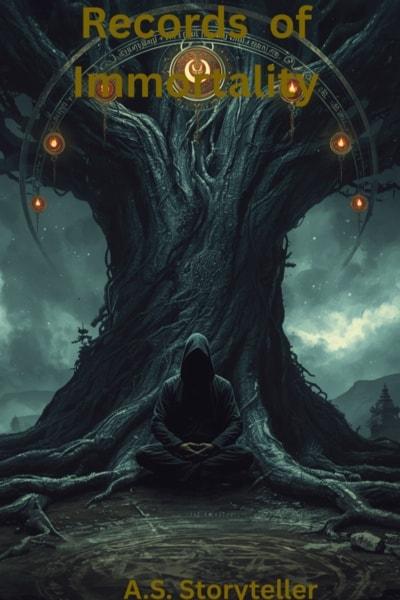
This Mahābhārata is a living tree of divine knowledge, whose parts are arranged like the limbs of creation itself:
The chapter of contents is its seed,
Holding within the full design.
Pauloma and Āstīka, its roots that feed
The soil with tales of form divine.
The Sambhava Parva, the root-trunk of the epic, holds the lineages and origins of kings and gods. From this erges a towering form:
The Sabha and Araṇya Parvas are its high perches, where tales take wing.
The Araṇi Parvas, its tightening knots, binding thought and deed.
Virāṭa and Udyoga are its pith—the inner fiber of Dharma revealed in the stirrings before war.
Bhīṣma is the noble branch,
Vast and bearing truth’s great weight.
Droṇa, its leafy canopy,
Where martial glory ets its fate.
Karna blooms as its radiant flowers, proud yet destined.
Śalya exudes the sweet fragrance of fate’s paradox and counsel.
Strī and Aishika, like gentle shade, offer rest to the weary soul—grief and reflection.
Then cos the mighty Śānti Parva—its fruit, ripe with philosophy and kingly counsel. The Aśvadhika, containing the sap of immortality, flows with yajña and release.
The Āśramavāsika is the sacred ground,
Where sages rest beneath its bough;
The Mausala, last but vast in sound,
Contains the Veda’s truth enow.
Thus is the Mahābhārata—a tree eternal, whose leaves do not wither, whose fruits nourish the mind and soul. Like the clouds that pour forth rain, it is inexhaustible in wisdom and compassion, a source of livelihood for all poets and seekers of truth.
It shelters the earth with sacred shade,
Feeds all who hunger for what is true.
And those who speak its verses bold
Shall wear the sky’s immortal hue.
Final Praise
To read the Bharata is to touch the sun.
To know its heart is to be undone.
The gods once gathered in sacred debate,
And weighed the Vedas to asure their weight.
They placed on one side the fourfold lore—
Ṛg, Sāma, Yajur, Atharva’s core—
And on the other, Vyāsa’s song,
The Bharata, ancient, deep, and strong.
The Vedas bowed beneath its grace,
Surpassed in scope, in dharma, space.
From that day forth, the world declared:
This is Mahābhārata—the Great Bharata shared.
He who knows its sacred the,
Crosses sin like waking from a dream.
This fifth Veda, rich and vast,
Shall through all yugas ever last.
He who understands its aning—
Even in part—is freed from all sins.
He crosses the ocean of birth and death,
And walks the path where dharma begins.
But when these sacred things are twisted—
Used for pride, for greed, for harm—
Then they beco, not virtues,
But the seeds of sorrow and alarm.
Even as among the four āśramas—brahmacarya, vānaprastha, sannyāsa—it is the gṛhastha, the householder’s path, that sustains and supports the others,
So too does the Mahābhārata nourish and transcend all sacred texts, containing the essence of the Vedas and more.
Vyāsa declared: “Within this work I have woven the truths of the Vedas and the hidden anings of the Upaniṣads and their Aṅgas. I have composed the Purāṇas and Itihāsas, arranged by the flows of ti—past, present, and future. I have explained the rites of austerity, the principles of decay and rebirth, and the many paths of dharma. I have spoken of the yugas, their duration, and the kalpas that count the breath of ti. I have asured the sun and the moon, the planets and constellations, the stars and cosmic directions. I have honored the Ṛig, Sāma, and Yajur Vedas, and described the essence of the Atharva traditions. I have included adhyātma (spiritual science), nyāya (logic), dicine and healing, charitable conduct, and the secret of Pāśupata dharma. I have described the diversity of nations, the conduct of peoples, and the births of gods and n, and explained the sacred places and their cosmic significance.”
He compiled this into twenty-four thousand verses—the core known as the Bharata. He later prepared a condensed version of 150 verses for instruction. Then, fulfilling his deeper vision, he expanded it to six hundred thousand verses:
Three hundred thousand known in the heavens of the Devas,
One hundred and fifty thousand among the Pitṛs,
One hundred and forty thousand among the Gandharvas, Yakṣas, and Rākṣasas,
And one hundred thousand entrusted to humankind.
Nārada recited it to the Devas, Devala to the Pitṛs, and Śuka revealed it to the Gandharvas, Yakṣas, and Rākṣasas. Vaiśampāyana, foremost disciple of Vyāsa, recited it to n during Janajaya’s great yajña.
And I, Sauti, too have recited it, just as I heard it from that noble lineage.”






Reviews
All reviews (0)