The Endurance
Now.
< >
Hades walked alongside Mortarion through the long corridor, their pace slow and unhurried, not in any rush to reach the next destination.
Mortarion remained silent as they walked, giving Hades space to think.
Hades was still reflecting on Mortarion's earlier words.
Even though the veteran soldiers from Terra had all sworn loyalty to Mortarion, Mortarion would not so easily grant them his trust.
It wasn’t just Mortarion’s paranoia.
In fact, veterans in every Legion often clashed with the newly arrived Primarch and fresh recruits.
For example, in the Ultramarines of the 13th Legion, Primarch Guilliman disapproved of the Terra veterans’ overly violent thods.
Likewise, in the 19th Legion, the Raven Guard, Corax disliked how the Terran veterans used the Imperial Army as bait in battle.
If a Primarch had enough personal charisma or sufficient political acun, the integration of old and new Legion mbers could be smoother.
A pri example was the 13th Legion, where Guilliman used his wisdom to guide the veterans onto a new path.
Similarly, in the 9th Legion, the noble Sanguinius managed to save his Legion of near-fallen vampires.
But there were also less favorable examples—like the 14th Legion, the Death Guard.
Mortarion's approach was simple: he used his brilliant military mind and strategy to compel the veterans into submission.
Then, he sent them into battles with high casualties, thinning their ranks to replace them with new recruits.
So of the more stubborn veterans clung to their old glories, volunteering for suicidal missions.
Others chose to completely trust their Primarch, abandoning their past triumphs.
In a way, from a different perspective, Mortarion's thod wasn’t necessarily less effective.
It allowed him to quickly insert his own people into the Legion and expand his control.
So might question this, as the Terran veterans had already sworn loyalty to Mortarion, so why would he need to further expand his power?
The truth was, these veterans were loyal to the Emperor’s command to serve the Primarch, not necessarily to the Primarch himself.
Many of the Dusk Raider veterans from Terra had witnessed the Emperor’s grandeur firsthand.
To them, a Primarch was simply a gift bestowed upon them by the Emperor.
With or without a Primarch, the Legion was already running smoothly under its own system.
Moreover, Mortarion’s return ca relatively late in the Great Crusade.
Only Angron, Corax, and Ogon had yet to be found after him.
This gave the Dusk Raiders a strong sense of independence.
Unlike the 12th Legion, the War Hounds, who were still envious of the grand returns of Guilliman and Sanguinius, the 14th Legion had long realized that they could perform just as well without a Primarch.
In fact, among the Dusk Raiders, there was a prevailing thought: "What does having a Primarch even change? The 14th Legion without a Primarch can still accomplish what those with one can."
The most extre veterans even viewed the Primarch with disdain, sarcastically waiting to see if he could truly improve the Legion.
These veterans walked proudly, with good reason.
They had fought through the majority of the wars on their own, quietly roaming the galaxy.
While other Legions cheered for their found Primarchs and prepared grand welco ceremonies, the Dusk Raiders fought silently in the far reaches of the galaxy.
When Sanguinius knelt before his sons, when Guilliman rebuilt the honor of the Ultramarines, and when Dorn returned to his vast and perfect pocket empire—
The Legions whose Primarchs were still lost could only watch from the sidelines.
So Legions felt envious, wishing their Primarchs would be as noble as Sanguinius, as glorious as Guilliman, or as proud as Horus.
There wasn’t a single Space Marine who didn’t long for the connection to their gene-father.
They longed for their Primarch to be the best, to be the most unique, to lead them to beco the most glorious.
But, as always, there are exceptions.
For example, the forr 14th Legion, the Dusk Raiders.
They had their own culture, their own history.
When the tactical points of a planet rotated to the junction of light and shadow, the full assault of the 14th Legion was just beginning.
They would strike under the twilight, launching massive ground offensives, the dim and beautiful light shrouding their dark power armor.
The ancient and traditional Albia tactics still proved their worth across the galaxy.
They were the warriors from Terra, the solid right arm of the Emperor.
Because of this, they earned a unique title—the Dusk Raiders.
They had their pride.
What’s even more intriguing is that this prideful, independent, silent, and stubborn attitude of the Dusk Raiders—self-reliant and unyielding—was, in a way, quite fitting for the sons of Mortarion.
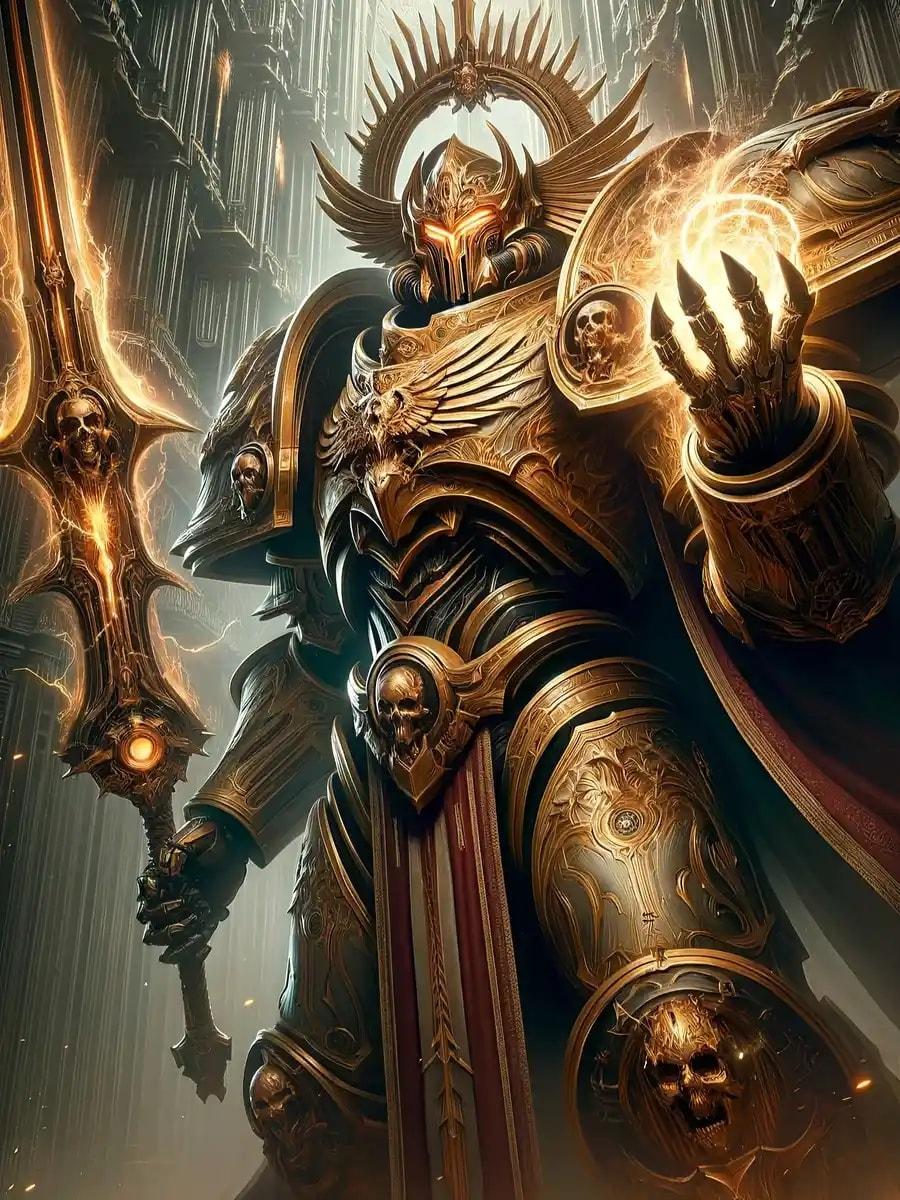
Mortarion, tall and imposing, still walked the corridors of the Endurance.
Hades glanced at him, unsure of how the Primarch and these veteran soldiers were truly getting along.
Personally, Hades hoped that the old and new forces of the Legion would integrate well.
Firstly, because Hades respected these veterans who had fought for a lifeti, and secondly, because a Legion filled with seasoned veterans was often much more powerful in combat.
Lastly, if Mortarion ever did decide to betray, these veterans from Terra would be the last bastion of loyalty among the Death Guard.
Sotis, though, thinking about such matters becos difficult, as you often don’t want to confront these questions head-on.
Hades knew that while he had successfully helped Mortarion overco one inner demon, fate was sothing he preferred to insure with double guarantees.
As for Typhon, Hades would find a way.
If persuasion was possible, he would attempt it.
But if it wasn’t...
—then he’d kill him.
What worried Hades was whether killing one future traitor would only lead to the rise of a second, or a third.
Or, even worse, would Mortarion, regardless of traitors, still fall into the trap of becoming a Daemon Primarch under Nurgle’s design?
Moreover, even without Nurgle’s plot, in the original tiline, Mortarion chose betrayal due to Horus’ influence.
For now, killing the Xenos Overlord Necare might seem significant, but in the grand sche of the Warhamr universe’s vast web of fate, it was just a tiny, insignificant thread.
As a small figure within a colossal species, how much could Hades really affect the tides of fate?
The future was too unpredictable, and his personal strength too small.
Given the current information, Hades could not yet determine his next course of action.
Should he flee? Fight? Try to turn the tide? Or hide from fate?
The mysteries surrounding him were already nurous.
Hades needed to observe more. He needed to think more.
He would find his answers.



Reviews
All reviews (0)