"The list of weapon modification suggestions sent by the front-line troops..." A weary officer from the Suthers Empire slumped in his chair, tossing a stack of docunts onto his desk.
On the Allied Forces’ side, they are also constantly upgrading their weaponry, hoping to develop more advanced equipnt through battlefield tinkering that can be more effective.
However, the problems are so nurous that many improvents are unrealistic wishful thinking, leaving the engineers at the rear half laughing and half crying.
"Let’s hope to find sothing useful this ti." Another officer in the office picked up a report, put on his glasses for a glance, and then tossed it aside: "More of this nonsense."
"What’s it about?" His colleague curiously asked.
"The request to increase the thickness of the tank’s front armor." The officer sneered dismissively: "If it could be done, wouldn’t we have done it long ago?"
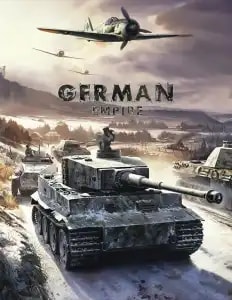
The Allied Forces know that their tanks can’t defend against the Tang Army’s tanks’ main guns; their tanks’ front armor thickness is generally only at the equivalent level of 80 to 100 milliters of homogeneous steel protection, which the Tang Army’s Type 96 can easily penetrate with a single shot.
However, the Allied Forces indeed have no solution: they tried to temporarily add 10 to 20 milliters of armor to the tanks, but it was practically useless.
Whether it’s the Tang Army’s anti-tank missiles, main tanks guns, or single soldier rocket launchers, the added thickness didn’t solve the problem.
If they further increase the thickness, Allied tanks could only move at a crawling speed. Unless they change to more powerful engines, their tanks would advance slower than reversing speed; how would the battle be fought?
But replacing engines would increase the cost of tanks, including the ti cost during production. This puts the already insufficient production capacity of the Allied Forces into a vicious cycle; if they improve the quality of individual tanks, they cannot maintain the quantity of tanks at the front.
Who can guarantee that increasing armor thickness and replacing with more advanced engines will definitely regain the advantage for their tanks in confrontations? In truth, no one can guarantee that! This makes tank improvent work fall into a dead loop.
This is also why the Allied Forces have not birthed any newer, stronger tanks until now: Their technological level forces them down the dead end of the "super-heavy tank" path, which is useless in armor-piercing shell confrontations.
"I say, this one’s quite interesting!" Upon seeing the third report, the Suthers officer brightened up, excitedly exclaiming.
"Hmm?" A few colleagues curiously gathered around to look at the report. They then saw an interesting proposal, or a curiously unconventional proposal.
The report suggested: "Since the existing tanks have so many useless things, why not remove them all, thereby potentially providing more simplified tanks to the front lines, giving us enough tanks to use..."
Many are doing addition, but few front-line officers think of subtraction. This person’s thinking is quite interesting, and he appears to be making quite sensible points.
For instance, he cites an example in his report: Since tank confrontations are always at a disadvantage, and our tanks almost never have the opportunity to fire back, then should the machine guns on the tanks be removed, as they serve no practical purpose?
Removing the machine guns ans fewer openings on the front armor, increasing strength while greatly simplifying the process; certainly a comndable proposal.
Likewise, since the machine guns are canceled, should the hundreds of shells inside the tank be reduced? After all, many tis they aren’t fully loaded, leaving empty racks inside is a waste.
Thus, removing so ammo racks to enlarge the tank’s internal space allows for installing other equipnt in these spaces.
Such as simple devices to prevent ammunition explosion: extinguishers or other items, thus increasing crew survival chances and preventing personnel loss from significantly affecting troop combat strength.
If addition fails, then try subtraction. The report even suggests enlarging the tank hatch for quicker crew entry and exit, facilitating easier escape.
Moreover, this person proposed a more radical solution in the report: retain armor protection only on the top and front, while designing the rear open-ended. After all, the Tang Army won’t attack from the rear; lacking defense at the back doesn’t affect the front...
"A talent... Get him into our departnt!" An officer praised: "We need talents like these!"
The Allied Forces indeed produced so "tank destroyers" without roofs, but they face a serious problem now: the Tang Army’s aerial exploding arrow clusters are too deadly.
The person writing the report clearly summarized lessons from this; he retained the roof of armored vehicles and canceled the rear defense... This person seems to have actual combat experience and the willingness to think, worthy of nurturing.
"We should also pay more attention to this; the front-line troops have raised similar issues for the fifth ti already." Another officer placed the report on the table: "Anti-aircraft gun automation issues. An entire anti-aircraft gun site wiped out, because turning speed was too slow, unable to intercept enemy planes..."
"Didn’t we discuss this before? Provide generators for the anti-aircraft guns... Might as well produce self-propelled anti-aircraft guns directly at the rear." His colleague shook his head, stating.
"So this ti, they changed their phrasing: If they’re not getting self-propelled anti-aircraft guns, might as well not provide them with anti-aircraft guns at all." The reviewing officer helplessly pointed to the report: "Useless weapons, they’d rather not have."
"Is this the opinion of front-line grassroots soldiers?" The colleague asked dismissively.
The officer nodded: "Indeed, it’s the view of the front-line anti-aircraft artillery troops. Because if they were senior officers, they’d want whatever they could get, without being choosy."
The thoughts of frontline soldiers and senior officers are completely different. Front-line soldiers hope for the best weapons to face the enemy, while their superiors lean towards utilizing whatever is available, wouldn’t prefer leaving slots empty instead of having weapons...







Reviews
All reviews (0)