The city awoke with the sound of engines.
Morning fog clung to the dos of Constantinople, giving the towers and minarets the look of ships adrift on a silver sea. The low thump of water-pumps echoed from the lower quarters. Along the se, rchants raised their shutters to let out the stale air of night and let in the new: a morning filled with the tallic pulse of innovation, a day hamred on the anvil of power.
Constantine stood above it all, flanked by Valerius and Marcus, his gaze fixed on the waterfront. Smoke rose in ribbons from the foundries along the Golden Horn. Every line of the harbor was changed: cranes, so built only yesterday, hunched over the piers, swinging loads of timber and granite as easily as a centurion would shoulder a pack. Below, teams of slaves and free n drove piles, constructed slipways, built new hulls under canvas and tarp. The city was becoming what he demanded: a living machine, iron-hearted and tireless.
He felt no pride. Only the tension of a bowstring drawn to breaking.
Behind him, Valentinus erged from the shadows, his eyes bloodshot, scrolls clutched in one hand, the other rubbing the sleep from his brow.
"Augustus," he said quietly, "the Alexandrian glass is secured. The chief scholar arrived under guard last night. He refuses to touch the vessel, but he has sent a list of his best apprentices to examine it. One claims he can replicate the glass itself, but the liquid inside… no one will even guess what it is."
Constantine nodded. "Lock the glass in the treasury. Let no priest near it. Assign soldiers to guard it-n who cannot read or write, n who will not talk. If the apprentices so much as hint at a secret, I want it reported to at once."
Valerius, listening, said, "There are already rumors. In the market, so say you have bottled a demon. Others speak of the city's luck turning sour since the glass arrived."
"Superstition is a weapon," Constantine replied. "Let them talk. Fear will keep the city obedient for now. But if anyone stirs panic, act. Quietly."
He glanced down at the Book of the Unseen, open to a page dense with diagrams and lines of strange text. Valentinus studied the text every night, but its aning changed with each reading. So days the Book spoke of water wheels, pumps, engines. Other days it whispered of fire that burned without fla, or dicine that healed wounds in a blink, or tals that bent and flexed like cloth.
"Work on the railway begins today," Valentinus reported. "The tracks have arrived from the western quarter. The engineers wait for your word."
Constantine did not answer at once. He looked over the rooftops, down at the first new engine smoking in the courtyard, then across the city walls toward the blue horizon of the Bosphorus. "Begin," he said. "No delays. We are already behind."
As Valentinus hurried away, Marcus remained, arms crossed, face closed.
"You push the n hard," he said. "Even the best of them grumble. The smiths, the laborers-they fear what they build. They fear you."
Constantine t his gaze without flinching. "Fear is a tool, Marcus. If it keeps them from breaking ranks or questioning orders, it serves us well."
"And when it breaks them?"
"It will not. Not while they believe I see everything. Not while bread is plentiful and pay is prompt. But if it does, there are always more n. This city is never empty."
Marcus nodded, saying nothing more. He had seen what happened to n who faltered under pressure. The empire ground down the weak and raised up only those willing to serve or to vanish.
At midday, a column of engineers assembled before the palace. Constantine descended the marble stairs, flanked by Valerius, Marcus, and two Praetorian tribunes. The crowd parted as he passed. His sons stood to one side-Constantine II, upright and anxious, Constantius careful and asured, Constans nearly lost in his older brothers' shadows. He made each of them look at the iron and steam.
"This is what will make or break your rule," Constantine said, voice low but sharp. "Not rhetoric. Not armies. The world changes. Rule with it, or be ruled by it."
He signaled to Valentinus. The chief engineer stepped forward and ordered the engine started. Fire kindled, water boiled, pistons moved. The railway cart, only a fra for now, lurched along the new-laid rails, hissing and rattling before coming to rest beside a pile of stone blocks. Workn cheered, more from nerves than joy. Priests scowled from the temple steps.
Constantine ignored both. He walked the length of the track, noting every misaligned rail, every loose spike. He ordered repairs on the spot, never raising his voice. Workers scrambled to obey.
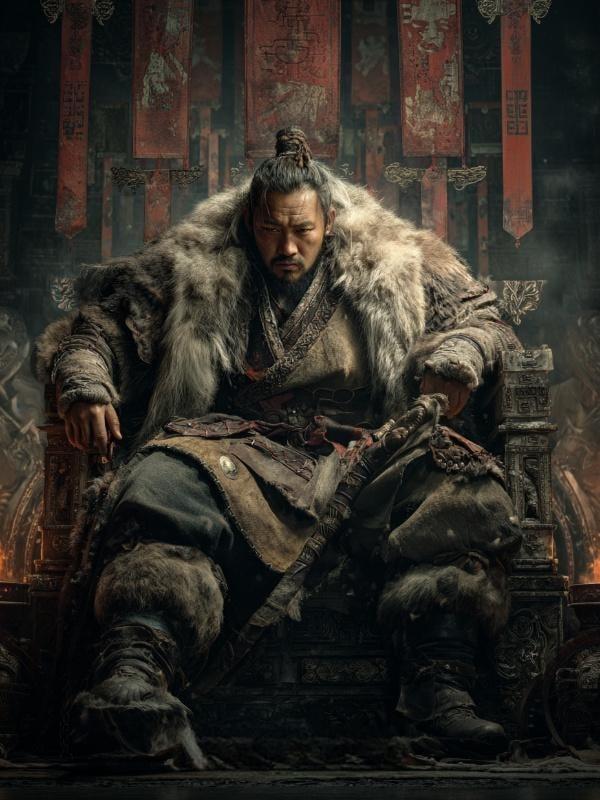
Later, as the heat of the day pressed down on the city, Valerius approached with news. "Reports from the north. The Slavic warlord calls himself Veles. Our spies say he wears a wolfskin, leads rituals at every victory. His n are gathering around the Black River, taking in refugees and criminals. No Roman patrol has returned from the frontier in six days."
Constantine listened, silent. "What else?"
Valerius hesitated. "So of our own defectors have joined him. They speak of miracles. Sickness healed overnight. Arrows that vanish before striking flesh. Villagers swear they have seen the dead walk in his camps."
"Superstition again," Marcus muttered.
"Perhaps," Valerius allowed. "But there is a pattern. Wherever Veles goes, the wild changes. Animals behave strangely. Crops grow too fast, then wither. Children are born with strange eyes."
Constantine absorbed it all, folding arms across his chest. "Send scouts. Volunteers, not conscripts. No one is to risk capture. I want knowledge, not martyrs. And instruct our best scholars-tell them to study everything the Book says of such phenona. There must be a logic, even if we do not see it yet."
He ordered an ergency eting in the war room. Around the table, his inner circle listened as he mapped out the situation.
"We have enemies who understand that fear is more powerful than swords. They use miracles to bind their people. We will use knowledge. We will use fire and steel."
He assigned Valentinus to coordinate a team of engineers, physicians, and priests. Their task: to create explanations for every wonder, to produce counter-miracles, to undermine faith in Veles before it could root too deeply. "If the people see we master fire and water," Constantine said, "the old magic will lose its hold."
"But what if we cannot explain what we see?" Marcus asked.
"Then we learn to use it," Constantine replied. "And we make it ours."
For the next week, the city worked and sweated under the Emperor's eye. The railway lengthened, crawling across the city, linking the palace with the new foundries and the wharves. More engines arrived, each larger and more complex than the last. Soon, carts loaded with stone and timber raced from the harbor to the heart of the city in hours rather than days.
The people watched, fearful and fascinated. Rumors spread faster than truth. Priests thundered in the basilicas, warning of doom. rchants grumbled about new taxes, but found their profits rising. For every voice raised against the new, two more fell silent, waiting to see where the Emperor's road would lead.
In the palace, Constantine t often with his sons. He forced them to observe the workers, to speak with the engineers, to calculate the cost of every new tool. "One day," he told them, "you will rule in a world remade by these machines. You will be its masters or its victims."
He demanded reports daily from every city. In Alexandria, the new engines began powering water wheels and mills. In Antioch, the first prototype forges lted bronze and iron for arms and plows. In Ro, the old senators fud in secret, their power draining away with every new aqueduct, every grain shipnt that arrived early.
Valerius, anwhile, expanded his network of spies. The wild stories from the north continued. Veles moved south, never staying long in one place. The landscape twisted around him-animals born with too many legs, crops sprouting overnight and rotting just as quickly, entire villages left abandoned in a night. Refugees flooded south, filling Constantinople's outer districts with stories and fear.
Constantine's response was simple: double the pace of construction, triple the grain dole, hire more workers, reward innovation, punish delay. His city must be a fortress, a factory, and a beacon. The world would see what Roman order could achieve.
One evening, as the city blazed with torches and the engines ran late into the night, Valerius returned from an inspection of the northern wall. "Augustus, the scouts from the Black River have returned. They bring a prisoner."
Constantine ordered the man brought in at once. The prisoner was a youth, ragged but unbroken, eyes wide with a wild, unnatural light.
"Who sent you?" Constantine asked.
"Veles," the boy replied in broken Latin. "He sent to warn you. He cos with the spring. He brings the old gods. Your machines will not save you."
Constantine nodded, unmoved. "We have heard such threats before. Tell -how do you do the things we have seen? The fire that does not burn, the animals that speak, the walking dead?"
The boy smiled, then spat on the floor. "You would not understand."
Constantine leaned forward, voice soft. "You will tell us. Or you will die, and your secrets with you."
The boy's eyes glead. "Then kill . There are others. More than you can count. When Veles cos, you will kneel."
Constantine ordered him taken away, to be held in strictest secrecy. He convened his council at once.
"We cannot wait for spring," he said. "We must move first. Marcus, ready the legions. Valerius, prepare a plan for infiltration. Valentinus, the Book may hold the answers we need-find them, or make them."
For the rest of the night, the palace beca a war room. Maps were marked, orders drafted, new machines sketched and approved. Every officer, every engineer, every scholar felt the weight of the coming test. The city's engines, so recently a marvel, now seed both shield and target.
Constantine slept little. He walked the galleries at dawn, listening to the distant sounds of hamrs and wheels, watching his city prepare for a future no one could fully imagine.
He did not pray. He did not hope. He only calculated, asured, and willed the world to his purpose.
As the sun rose over Constantinople, the city seed to tremble-not with fear, but with anticipation. The age of steel was no longer a dream. It was real, as hard as the iron rails crossing the city, as relentless as the Emperor who had summoned it into being. The world was changing, and with it, the last defenses of the old order began to crack.
Constantine stood at the window as the first true train rolled out of the palace yard, steam billowing, wheels screaming on new-forged iron. He watched the city take up the challenge of destiny. In his mind, he heard only one truth: the future belongs to those who seize it, whatever the cost.
He turned away from the window and called for his sons. It was ti to teach them what it ant to rule in a world remade-by fire, by steel, by the hunger of ambition. No power, no magic, no old god could stand against that.
Not while he still drew breath.


Reviews
All reviews (0)